



 If you've recently found it difficult to raise both arms to get dressed, or you're frequently waking up at night because of severe pain around your shoulder, you may already be suffering from “frozen shoulder,” also commonly known as adhesive capsulitis. Living in a fast-paced city like Hong Kong, many people ignore early shoulder aches due to busy work schedules until it worsens into frozen shoulder, severely impacting daily life. This article provides a comprehensive guide to frozen shoulder—covering its causes, symptoms, professional diagnosis, and treatment options—while debunking common myths about its recovery timeline so you can get the right treatment early and regain freedom of movement.
Understanding Frozen Shoulder: Why It's Called “Fifty Shoulder” or “Frozen Shoulder”
(  Click the image to enlarge )
The Medical Definition of Adhesive Capsulitis and Common Names
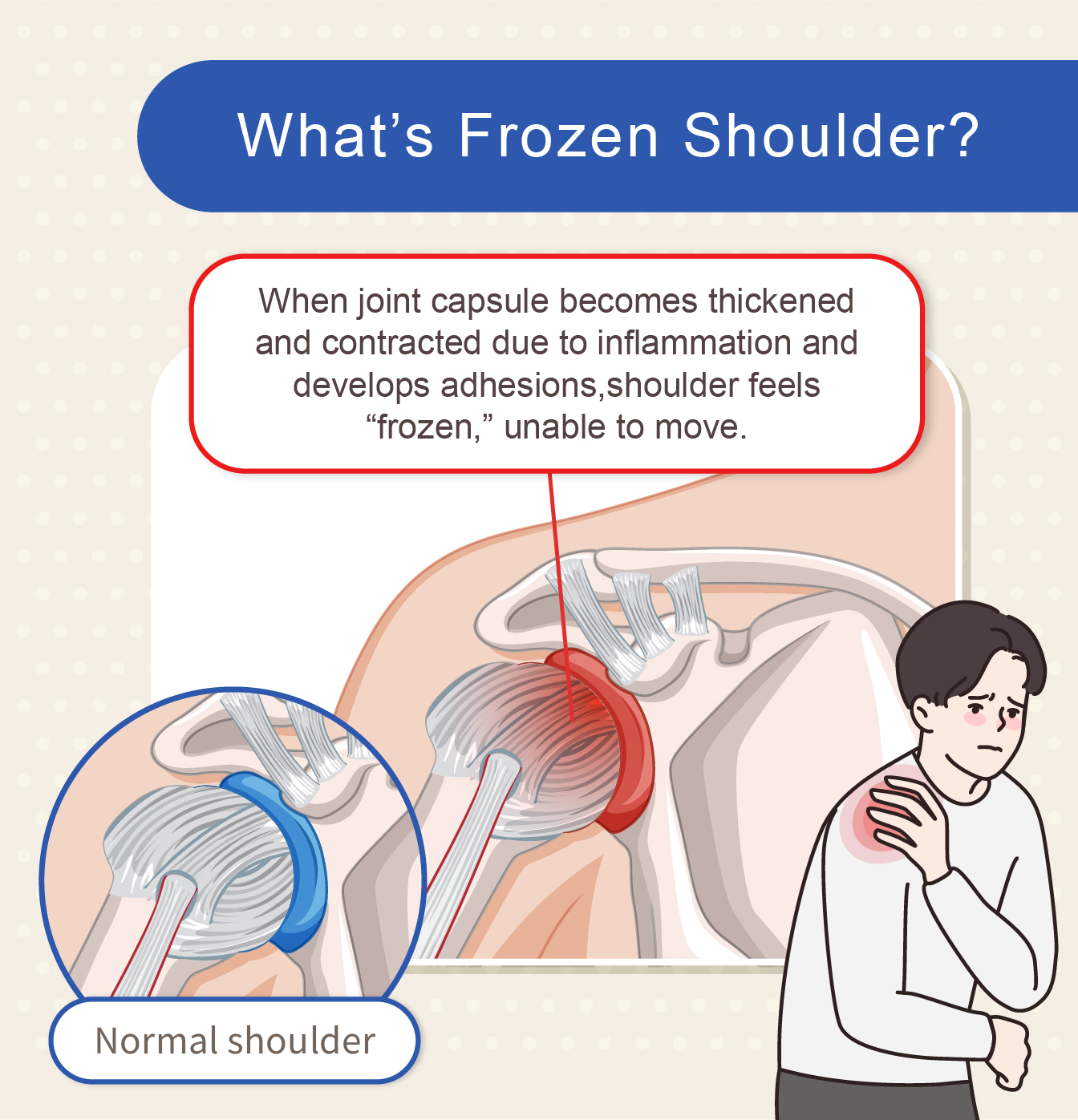
The formal medical name for frozen shoulder is adhesive capsulitis. Your shoulder joint is surrounded by a layer of elastic connective tissue called the joint capsule, which helps wrap and protect the joint. When this joint capsule becomes thickened and contracted due to inflammation and develops adhesions, your shoulder feels “frozen,” unable to move. That's why it's called “frozen shoulder” in English.
What's the Difference Between Primary and Secondary Frozen Shoulder?
- Primary frozen shoulder: The cause is unknown. Patients usually have no clear history of injury. It is often related to individual constitution, age, or chronic conditions (such as diabetes).
- Secondary frozen shoulder: There is usually a clear trigger, such as a car accident, sports injuries, fractures, or long periods of reduced shoulder movement caused by conditions like breast cancer surgery or stroke.
Which Age Groups Are at Highest Risk?
Although it's called “fifty shoulder,” it's not limited to people aged 50. Frozen shoulder most commonly occurs in adults aged 40 to 60.
Why Does the Joint Capsule Become Inflamed and Stick Together? Key Triggers of Frozen Shoulder
How Scar Tissue Forms and the Joint Capsule Thickens (Physiological Process)
When the joint capsule develops synovitis (inflammation of the synovial lining), the body triggers a repair response. However, excessive repair can lead to the overgrowth of fibroblasts, forming thick scar tissue. The joint capsule then loses elasticity due to contraction, the joint cavity becomes smaller, and severe pain may occur when traction or movement is attempted.
Lifestyle and Work Habits: Repetitive Movements, Long Periods in Fixed Postures, and Household Work
Sustaining poor posture at a desk for long hours (using computers), or working in jobs that require frequent repetitive lifting (such as cleaning staff, construction workers, and teachers), can cause long-term overuse of the soft tissues around the shoulder and increase the risk of joint capsule inflammation.
Impact of Chronic Health Conditions: Diabetes, Thyroid Disorders, Cardiovascular Disease, and Parkinson's Disease
Medical research has found that endocrine and metabolic diseases are among the highest-risk triggers. People with diabetes have a higher risk of developing frozen shoulder, and the condition often tends to be more stubborn. They also have a higher likelihood of developing it in both shoulders at the same time. In addition, individuals with hyperthyroidism or hypothyroidism, cardiovascular disease, and Parkinson's disease also face an increased risk.
How Shoulder Injuries or Post-Operation Immobilization Can Trigger Frozen Shoulder
A harmful cycle often occurs: “Pain makes you avoid movement, and avoiding movement makes the pain worse.” If, due to a fall, fracture, or rotator cuff tear, you end up using a shoulder support sling for a long time to keep the shoulder immobilized, the joint may develop adhesions as the joint capsule contracts due to the lack of movement.
The Connection Between Neck Problems and Frozen Shoulder
Degeneration in the cervical spine or a herniated disc may compress nerves and cause radiating pain around the neck and shoulders. To avoid pain, patients may reduce shoulder movement; over time, this can indirectly trigger secondary frozen shoulder.
Three Stages of the Condition: Which Stage Is Your Shoulder In?
|
Stage |
Duration |
Symptoms and Physical Changes |
|
Acute (Inflammatory) Phase |
6 weeks to 9 months |
This is usually the most painful stage. The shoulder may have mild aches or severe pain—especially when turning or moving the shoulder. Pain often worsens at night or when the weather turns colder, severely affecting sleep quality. Range of motion also begins to decrease. |
|
Freezing Phase |
4 to 6 months |
As the inflammation stabilizes, acute pain at rest may diminish. However, the joint capsule has already developed significant adhesions. The shoulder becomes abnormally stiff. Daily actions such as lifting the arm, combing hair, washing the back, and reaching for items at higher locations become difficult. |
|
Thawing (Recovery) Phase |
6 to 24 months or longer |
The adhesions in the joint capsule gradually loosen. Pain significantly decreases, and shoulder range of motion slowly returns. |
The First Functional Limitations: Which Daily Movements Are Often Affected First?
The most typical early symptom is restricted external rotation—for example, keeping the elbow close to the side of the body while attempting to rotate the forearm outward. After that, abduction (lifting the arm to the side) and internal rotation (reaching behind the back) are also commonly affected.
Frozen Shoulder or Other Shoulder Pain? How to Tell the Difference
Key Differences Between Frozen Shoulder and Shoulder Impingement Syndrome
- Frozen shoulder: The joint capsule tightens in all directions. Whether you try to move your shoulder yourself or someone else helps lift your arm, the shoulder feels “stuck” and you cannot raise it.
- Shoulder impingement syndrome: Pain usually occurs only at specific angles—most commonly when lifting the arm sideways at about 60 to 120 degrees. With assistance from someone else, you can often raise the arm higher.
Why External Rotation Is Usually Limited First? Identifying the Cause by Movement Response
Frozen shoulder has a fairly characteristic pattern of joint capsule tightening. Typically, the first and most severely restricted movement is external rotation, followed by abduction and then internal rotation.
If your shoulder pain is limited in only one direction, it is more likely related to tendinitis.
Self-Assessment Reference for Three Movement Angles
- Forward raise then upward (flexion): Normally you should be able to bring your arm close to your ear. With frozen shoulder, you may only be able to raise it to about 90 degrees.
- Elbow bent 90 degrees, close to the waist, rotating outward (external rotation): Normally external rotation is about 60–90 degrees. Patients may be unable to externally rotate at all.
- Reach behind your back to touch (internal rotation): Normally you can reach to the lower edge of the shoulder blade. With frozen shoulder, even reaching as far as the waist may be difficult.
Labral Tear and “Inertial Dislocation” (Shoulder Instability): When Joint Structure Damage Causes Repeated Instability
This is more commonly seen in younger people or athletes. Typical signs include feeling that the joint is loose or experiencing sharp pain during certain movements or when generating strength. This is clearly different from the stiff, “stuck” limitation typical of frozen shoulder.
When Should You Seek Medical Care for Frozen Shoulder?
Warning Signs You Should Not Ignore (Don't Delay Seeing a Doctor)
If you have any of the following, please seek medical care as soon as possible to avoid missing the “golden treatment window”:
- Shoulder pain lasts more than two weeks with no improvement.
- Night pain is so severe that it wakes you up, and you need pain medication to sleep.
- You cannot fully raise your arm, and daily activities like dressing and undressing are significantly affected.
- Your shoulder has been injured, and after the injury you develop persistent pain and stiffness.
How Do Doctors Diagnose Frozen Shoulder? Physical Examination and Imaging
Clinical Meaning of Assessing Active vs. Passive Range of Motion
Doctors will ask you to perform several movements yourself (active range of motion). Then they will assist you in moving your arm (passive range of motion).
If both movements are clearly limited, and external rotation is the most difficult, this is an important indicator for diagnosing frozen shoulder.
The Specific Roles of X-ray and Ultrasound in Diagnosis
- X-ray: Mainly used to rule out bone-related problems such as fractures, osteoarthritis, bone spurs, or tumors. In frozen shoulder, X-rays are usually normal.
- Ultrasound: Can clearly show soft tissue conditions, helping doctors determine whether the joint capsule is thickened, and helping rule out rotator cuff tears or bursitis.
Ruling Out Similar Conditions: Rotator Cuff Tear, Arthritis, and Calcific Tendinitis
Because symptoms can look similar, doctors must use a detailed physical examination and imaging results to rule out other conditions—such as rotator cuff tears (unable to lift using strength) and calcific tendinitis (sudden, intense stabbing pain)—so they can create the correct frozen shoulder treatment plan.
Treatment Options for Frozen Shoulder: From Conservative Therapy to Surgery
Oral Anti-inflammatory and Pain Medications—Indications and Limitations
During the acute phase, doctors often prescribe non-steroidal anti-inflammatory drugs (NSAIDs) to reduce inflammation and pain, helping patients sleep better.
However, medication mainly treats symptoms (pain and inflammation) and cannot directly release adhesions inside the tightened, stuck joint capsule.
Corticosteroid Injection—When Is It Most Effective?
If the pain is severe during the acute phase, doctors may recommend a corticosteroid injection under ultrasound guidance, injecting the steroid and local anesthetic directly into the shoulder joint space. This can quickly suppress the strong inflammatory response and significantly reduce pain—creating a better foundation for the next step: physiotherapy.
How Does a Physiotherapist Restore Shoulder Range of Motion Step by Step?
Physiotherapy is a core part of frozen shoulder rehabilitation. The physiotherapist will first assess the stage of the condition, the level of pain irritability, and the degree of movement restriction, and then provide appropriate joint mobilization, soft tissue release and progressive exercise training to help improve joint range of motion, while teaching the patient how to continue exercising safely at home. Treatment intensity is adjusted according to the patient's pain response — during the highly painful stage, gentle, small-range movements are emphasised; as the condition progresses into the frozen and thawing stages, stretching range and strengthening exercises are gradually increased. This approach avoids over-irritation of the joint while ensuring that rehabilitation continues to progress.
Instrument-Assisted Therapies: The Respective Roles of Ultrasound, Interferential Therapy and Shockwave
- Therapeutic ultrasound and interferential therapy: These can serve as adjunct treatments to temporarily relieve pain, relax the muscles and improve local discomfort, creating more comfortable conditions for exercise therapy. (Actual effectiveness varies between individuals; current evidence suggests their effect is limited when used alone, and they should be combined with exercise therapy.)
- Shockwave therapy: Some patients may be advised to use shockwave therapy as a supportive treatment. Its aim is to promote tissue repair and modulate pain responses through physical stimulation, helping to address certain stubborn discomfort or issues related to calcification and scarring. (Suitability should be assessed by a qualified professional.)
Manipulation Under Anesthesia (MUA)—Principle and When It's Appropriate
If conservative treatment for about six months shows no progress, an orthopaedic specialist may recommend Manipulation Under Anesthesia (MUA). Under general anesthesia—when the patient is pain-free and the muscles are fully relaxed—the doctor will forcibly stretch and tear the tightened/adhesive joint capsule using external force.
Arthroscopic (Minimally Invasive) Shoulder Surgery—Who Should Consider It?
For patients with highly stubborn conditions, arthroscopic capsular release is the ultimate solution. An orthopaedic specialist will insert an endoscope through a few tiny incisions to precisely release the thickened and tightened joint capsule. This minimally invasive procedure involves minimal trauma and allows for a rapid recovery. For a detailed assessment and to discuss minimally invasive surgery, schedule an appointment (hyper link to booking system – orthopaedic) with an orthopedic specialist at St. Paul's Hospital Specialist Outpatient Department to receive a personalized treatment plan.
How Long Does Frozen Shoulder Take to Get Better? Understanding Recovery Time and Key Factors
Many patients ask: “How long will frozen shoulder take to get better?”
If You Don't Receive Any Treatment, How Long Will Natural Recovery Take?
Frozen shoulder is a “self-limiting“condition. In general, even without treatment, the condition will eventually enter a “thawing” phase on its own.
However, the natural recovery process varies depending on the person's body. Without proper treatment and care, some patients may ultimately be unable to recover 100% of their original range of motion.
Can Active Participation in Physiotherapy Shorten Recovery Time?
Following a thorough assessment, patients who engage in physiotherapy early and perform appropriate exercise training as instructed may see gradual improvement in pain and functional mobility. Research suggests that progressive, stage-matched exercise therapy is generally more favourable for restoring joint function than simply waiting for natural recovery. However, each patient's condition, pain level and response to recovery differ, so the time required and the degree of improvement are not uniform. Nonetheless, consistent, step-by-step rehabilitation exercises, together with good adherence to a home exercise programme, usually help improve shoulder range of motion and daily function.
Key Factors Affecting Individual Recovery Progress
- Presence of diabetes: Adhesions in patients with diabetes tend to be more stubborn, and recovery time is usually longer.
- Timing of treatment intervention: The earlier an appropriate diagnosis, treatment and rehabilitation guidance are obtained, the more favourable the outcome usually is in terms of improving range of motion, controlling pain, and reducing the risk of long-term joint restriction.
- Adherence to home exercises: Rehabilitation outcomes do not depend solely on time spent in the clinic; whether patients can consistently and correctly perform exercises at home as instructed by their therapist is one of the key factors influencing recovery progress.
Home Shoulder Rehabilitation Exercises Recommended by Physiotherapists
In addition to receiving treatment, patients need to perform home exercises diligently in order to consolidate and sustain the benefits of therapy. The following exercises are based on the principles of gentleness and safety, and are suitable as starting practice for most patients. However, as every individual's condition is different, you may also seek assessment and guidance from the professional physiotherapists at St. Paul's Hospital Rehabilitation Centre before attempting any advanced exercises. Appointments are welcome.
(  Click the image to enlarge )
Pendulum Exercise: The Gentlest Starting Exercise During the Painful Stage
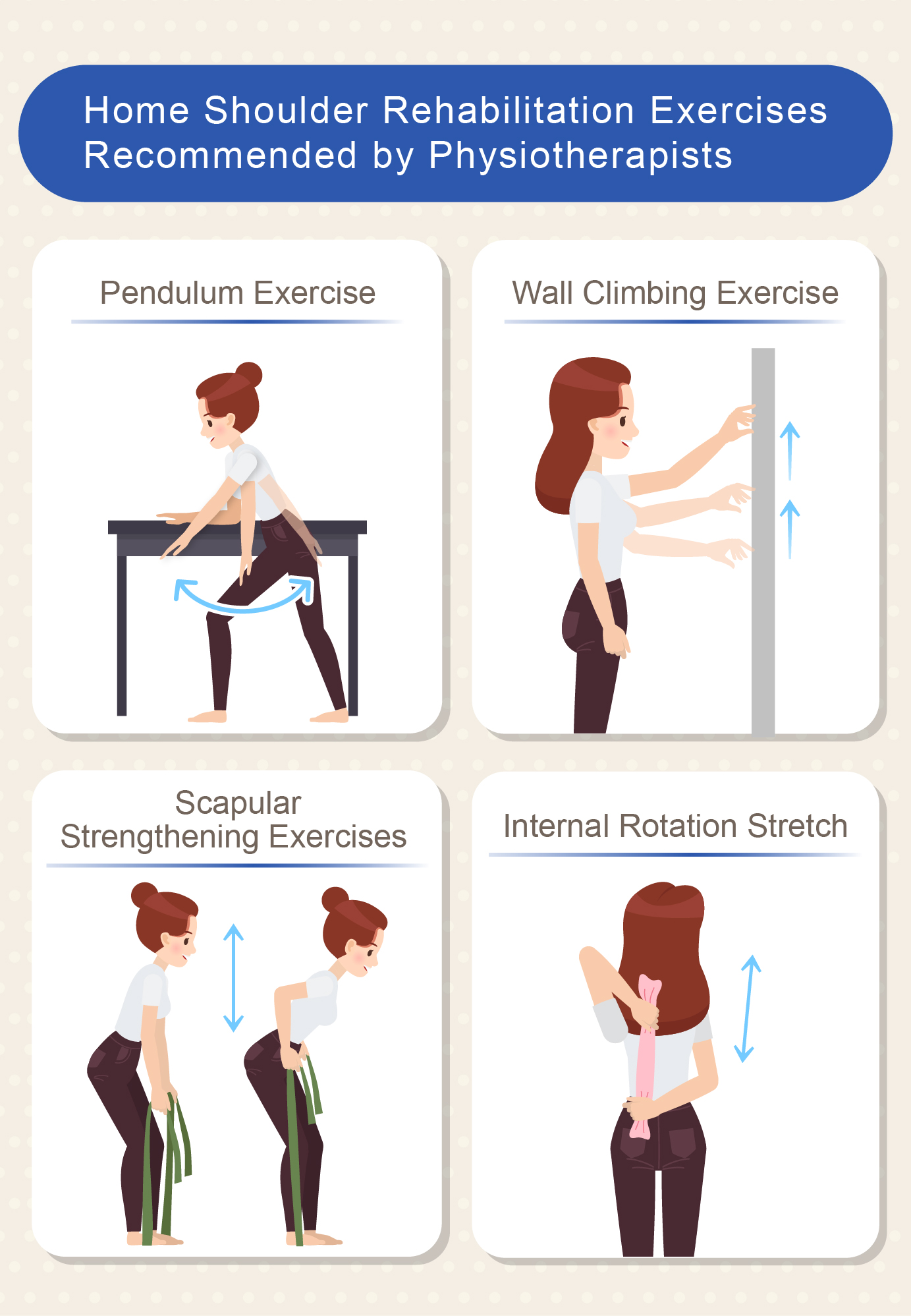
Lean your body forward and support yourself with the unaffected hand on a table, allowing the affected arm to hang down naturally and relaxed. Use gentle swaying of your body weight to move the arm passively, letting it perform small, gentle movements — forwards and backwards, side to side, and in circles — about 10 repetitions in each direction, 2 to 3 sessions daily. The key point is that the movement should be driven by the momentum of the body, not by actively swinging the arm. Keep the arm relaxed and do not provoke increased pain. This exercise (the Codman pendulum exercise) is a low-load joint movement, particularly suitable as a starting exercise during the acute painful stage, helping to maintain basic joint mobility and ease tightness.
Wall Climbing Exercise—Gradually Increasing Forward Elevation
Stand facing a wall at approximately a forearm's distance. Slowly "walk" your fingers up the wall until you feel a mild stretch or tolerable tightness, hold for about 10 to 15 seconds, then slowly walk your fingers back down. Throughout the exercise, let movement control and your pain tolerance be your guide — never force the movement into sharp pain. It is recommended to perform 2 to 3 sets daily, with 5 to 10 repetitions per set. As your range of motion improves, gradually stand closer to the wall to increase the angle of forward elevation.
Scapular Strengthening Exercises —Building Stable Support
Once pain is gradually under control and joint mobility allows, training of the muscles around the shoulder blade (such as the middle and lower trapezius and serratus anterior) can be added under the guidance of a physiotherapist — for example, rowing movements with a resistance band or scapular retraction exercises. The goal is to enhance the stability of the shoulder girdle and improve scapulohumeral rhythm, providing a solid foundation for arm movement and supporting daily activities. Training intensity should be progressed gradually, with the principle of not provoking any significant increase in pain.
Internal Rotation Stretch: Restoring Hand-Behind-Back Movement
Hold a towel behind your back with both hands, one at each end (unaffected hand on top, affected hand below). Use the unaffected hand to gently pull the towel upwards, assisting the affected hand to slide up along the back until a stretching sensation is felt in the affected shoulder. Hold for about 10 to 15 seconds, then relax back to the starting position, and repeat 5 to 10 times. The movement should not provoke any marked increase in pain. Internal rotation (reaching behind the back) is typically one of the last movements to recover in frozen shoulder, so patience and consistent practice are essential.
Living With Frozen Shoulder—Daily Life Protection and Adjustments
Optimal Sleeping Positions and Pillow Placement for the Affected Shoulder
When sleeping, avoid lying directly on the affected shoulder as much as possible. When lying on your back, place a thin rolled towel or small pillow under the affected upper arm to keep it slightly abducted and supported, preventing the shoulder joint from falling backwards into a strained position for prolonged periods and reducing night-time discomfort. If you prefer sleeping on your side, it is advisable to lie on the unaffected side and hug a pillow in front of your chest to support the affected arm. Night pain is a common symptom of frozen shoulder, and appropriate sleeping position adjustments can help improve sleep quality and, in turn, daytime rehabilitation performance.
Energy-Saving Tips for Dressing, Hair Combing and Housework
When dressing, put the affected arm into the sleeve first, followed by the unaffected arm; when undressing, remove the unaffected arm first, then the affected arm (a simple rule: "affected side in first, unaffected side out first"). Choose loose-fitting, stretchy or front-fastening clothing to reduce the need to raise the arm overhead or reach behind the back. When combing hair, reaching for objects or doing housework, minimise repetitive overhead arm movements, and keep frequently used items at waist-to-chest height to avoid stretching up on tiptoes for objects on high shelves.
Posture Management for Prolonged Computer Use in the Office
When using a computer, position the top of the monitor at eye level, keep both shoulders relaxed and naturally lowered, and support the elbows at approximately 90 degrees of flexion. Keep the keyboard and mouse close to the body to avoid shoulder shrugging or prolonged forward reaching of the arms. Stand up and move your shoulders and neck every 30 to 45 minutes, and perform simple stretches such as shoulder rolls and scapular retractions, to prevent the shoulder and neck muscles from remaining in a static, tense position for extended periods.
The Practical Role of Keeping the Shoulder Warm in Symptom Control
In colder weather, the muscles around the shoulder and neck may become tighter, which can heighten the perception of pain. When going out, wear a scarf or collared clothing as needed. When showering, let warm water run over the shoulder for a few minutes, or apply a heat pack for about 15 to 20 minutes before exercising. This helps relax the muscles, promote local blood circulation, and serves as a useful warm-up before home exercises, making stretching easier to perform. However, heat therapy is only an adjunct — it must be combined with exercise therapy in order to improve joint range of motion.
Prevention Strategies to Reduce the Risk of Frozen Shoulder
Keep the Shoulder Moving Regularly and Avoid Prolonged Immobility
Keeping the shoulder joint moving regularly helps maintain the flexibility of the joint capsule and normal range of motion. In daily life, stretches and movements can be performed within a range that does not provoke significant pain — for example, multi-directional movements such as forward elevation, abduction and reaching behind the back. Generally speaking, avoid keeping the shoulder completely still for long periods out of fear of pain — prolonged immobilization is one of the key factors that triggers and worsens joint capsule adhesion. Only appropriate movement can preserve the joint's mobility.
What extra precautions should people with chronic diseases (especially diabetes) take?
For people with diabetes, proper blood sugar control is very important for preventing primary frozen shoulder. Keeping blood sugar stable can reduce the formation of advanced glycation end products (AGEs), helping prevent collagen from becoming damaged and accumulating within the joint, thereby greatly lowering the chance of joint capsule irritation and inflammation.
After a shoulder injury, how to prevent adhesions from forming during recovery
If you unfortunately experience a fracture or undergo shoulder surgery, you should start appropriate passive and active shoulder joint movements as early as your doctor allows, and under the guidance of a physiotherapist. Avoid keeping your arm immobilized for long periods.
Frozen Shoulder: Frequently Asked Questions
Which kind of specialist should I see for frozen shoulder?
If you suspect you may have frozen shoulder, the first choice is to see an orthopaedic specialist for precise imaging diagnosis and to rule out other joint injuries. After confirmation, doctors typically refer patients to a physiotherapist for rehabilitation.
If I don't treat frozen shoulder, will it really get better on its own?
Although most frozen shoulder cases eventually improve gradually, without active treatment you may have to endure long-term pain and inconvenience. In some patients, mild limitations in joint range of motion may still remain after recovery.
Is physiotherapy necessary for frozen shoulder recovery?
Many cases require physiotherapy as an essential part of rehabilitation. Medications and injections are primarily used to reduce pain and inflammation, addressing the symptoms; whereas the manual therapy and progressive exercise training provided in physiotherapy target the underlying problems, such as joint capsule tightness and reduced muscle function. Physiotherapy usually helps improve movement restriction, restore muscle strength, and enhance daily function. The two approaches complement each other — using medication first to control pain, then making the most of the pain-free or low-pain window to carry out exercise therapy — is often the more ideal treatment strategy
Which Movements and Exercises Should Be Actively Avoided During the Condition?
When pain is more pronounced during the acute stage, the following types of activities should generally be avoided:
- High-intensity or forceful exercises (e.g., explosive power training, heavy weightlifting)
- Repetitive movements requiring large overhead ranges (e.g., throwing, reaching up high for objects)
- Deliberately forcing the arm to its maximum limit, or repeatedly performing aggressive deep stretching through severe pain
- Having the affected joint forcibly pulled or pressed by another person
These movements may aggravate pain, irritate the inflamed joint capsule, delay recovery, or increase discomfort while the joint capsule is not yet stable. It is important to note that "avoiding" does not mean "complete immobility" — maintaining gentle movement within a pain-free range, or up to a mild stretching sensation, remains a key principle during the acute stage.
Is Massage or Tui Na Effective for Frozen Shoulder? Are There Potential Risks?
Gentle soft tissue release may help ease the secondary muscle tightness and discomfort around the shoulder and neck. However, massage itself cannot release an adherent, contracted joint capsule, so its effect on the core pathology of frozen shoulder is limited. Furthermore, receiving forceful manipulation or having the joint forcibly stretched during the acute painful (inflammatory) stage may irritate the joint capsule, aggravate the inflammatory response, or cause secondary injury. A safer approach is to first seek an assessment by a qualified physiotherapist, who can select manual therapy and exercise training of appropriate intensity according to the stage of the condition (freezing, frozen, or thawing stage).
How long does a corticosteroid injection last? Are there side effects?
Corticosteroid injections can quickly reduce inflammation and relieve pain. The effect typically lasts from several weeks to several months, creating a “pain-free window” that allows you to participate more effectively in physiotherapy. As long as the number of injections is controlled according to your doctor's instructions, the risk of side effects is usually very low.
Is frozen shoulder only a problem after age 50? Can young people get it too?
Although it's more common in ages 40–60, young people can also develop frozen shoulder,especially if they often maintain poor posture, don't exercise regularly, or have had sports injuries that were not properly addressed.
Special considerations for people with diabetes during frozen shoulder treatment
Besides having more difficulty loosening adhesions, if a diabetes patient chooses corticosteroid injections, it may cause short-term blood sugar fluctuations. Therefore, diabetes patients must monitor blood sugar closely after the injection and communicate closely with their primary doctor.
How can an orthopaedic specialist treat frozen shoulder?
An orthopedic specialist can diagnose frozen shoulder through imaging to rule out other injuries such as rotator cuff tears. In the severe inflammatory phase, doctors may perform ultrasound-guided corticosteroid injections to rapidly relieve pain and inflammation. For stubborn “frozen shoulder,” treatment may also include manipulation under anesthesia (MUA) or arthroscopic minimally invasive surgery to directly cut and release the adhesions in the joint capsule, helping you regain mobility as early as possible.
The article has been reviewed by Dr. Chan Chong Chung, Specialist in Orthopaedics & Traumatology
This article is provided for health education and reference purposes only. If you have any medical questions or health concerns, please consult your doctor.


