


The article has been reviewed by Dr. Lai Wai Man, Sonia , Specialist in Obstetrics & Gynaecology, St. Paul's Hospital


Uterine fibroids, also known as “uterine tumors”, are one of the most common benign (non-cancerous) growths in gynecology. Many women discover them during routine health checkups. Although uterine fibroids are very common, what symptoms do they cause? Can they resolve on their own?
This article provides a comprehensive medical guide to help you better understand uterine fibroids, including their causes, types, diagnosis methods, and available treatment options.
What Are Uterine Fibroids?
Uterine fibroids (leiomyomas) are benign tumors of the smooth muscle cells in the uterus, commonly affecting women over 35 years old. Statistics show that about 3 in every 10 women have them1 with prevalence increasing with age. The vast majority of uterine fibroids are benign and do not turn into cancer.
Types of Uterine Fibroids
(  Click the image to enlarge )
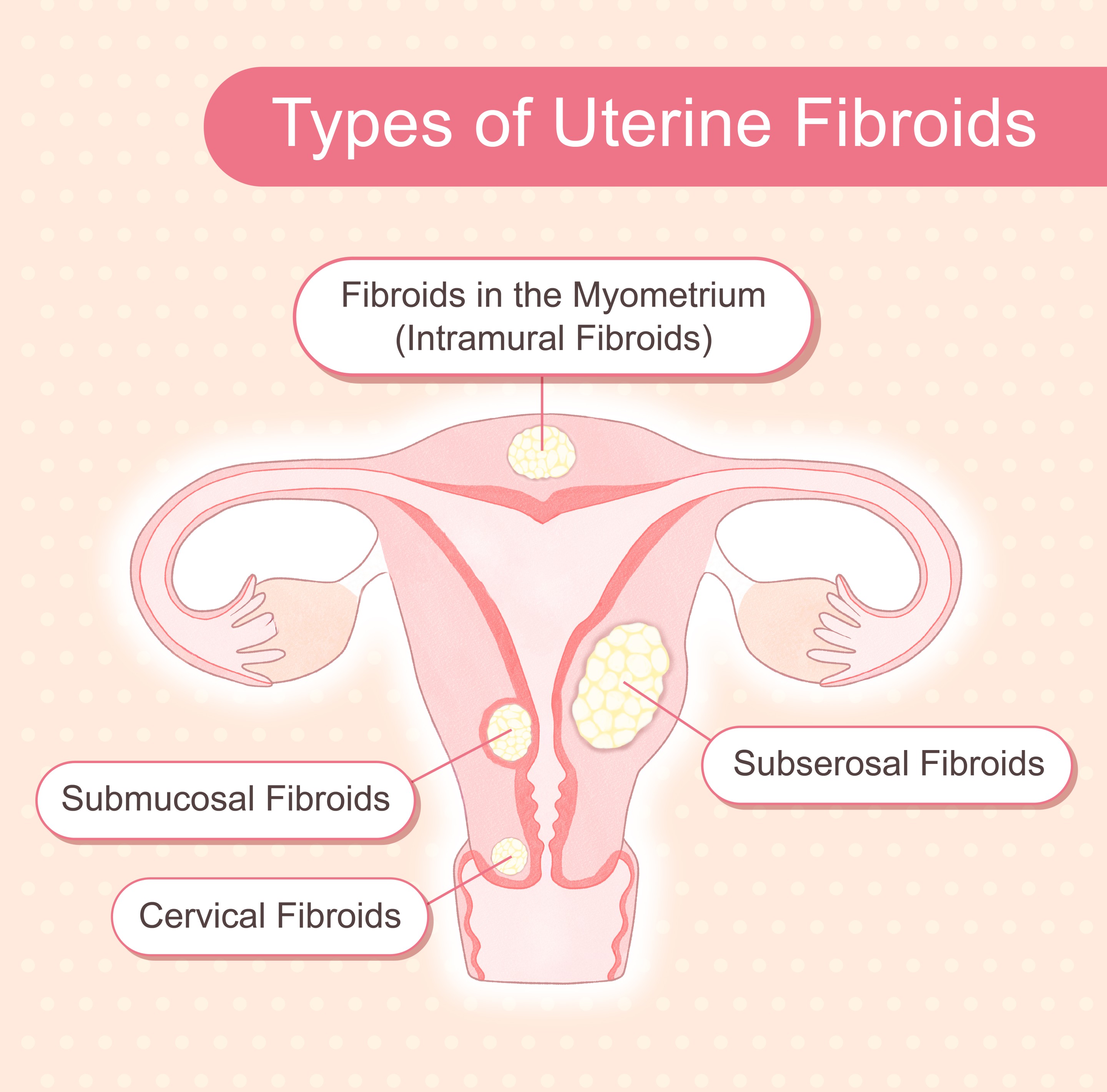
Fibroids in the Myometrium (Intramural Fibroids): The Most Common Type
Fibroids grow within the muscle layer of the uterus. They are located between the endometrium (lining) and the serosa (outer covering). They may cause the uterus to enlarge, leading to heavy menstrual bleeding or a feeling of abdominal pressure.
Subserosal Fibroids: Affecting Urination and Bowel Movements
These fibroids grow outward from the outside wall of the uterus (the serosal surface), developing on the outer side. In the early stages, there are often no obvious symptoms, making them easier to overlook. They are usually discovered later, when the fibroid grows large enough to press on nearby organs—such as the bladder or intestines.
Submucosal Fibroids: Blood-Heavy Symptoms
Fibroids grow into the uterine cavity (from the uterine lining side), located just beneath the endometrium. They are more likely to cause severe menstrual bleeding, prolonged periods, and may also be linked to infertility or miscarriage.
Cervical Fibroids: A Rarer Type
Fibroids grow in the cervix, which is relatively rare. Many women with cervical fibroids may not have noticeable symptoms and may only discover them during routine examinations.
Who Is at Higher Risk for Uterine Fibroids?
While the exact cause of uterine fibroids is not fully understood, medical research generally suggests a strong connection to hormones (especially estrogen) and genetic factors. Therefore, women with a family history of uterine fibroids face higher risk.
What Symptoms Might Uterine Fibroids Cause?
(  Click the image to enlarge )
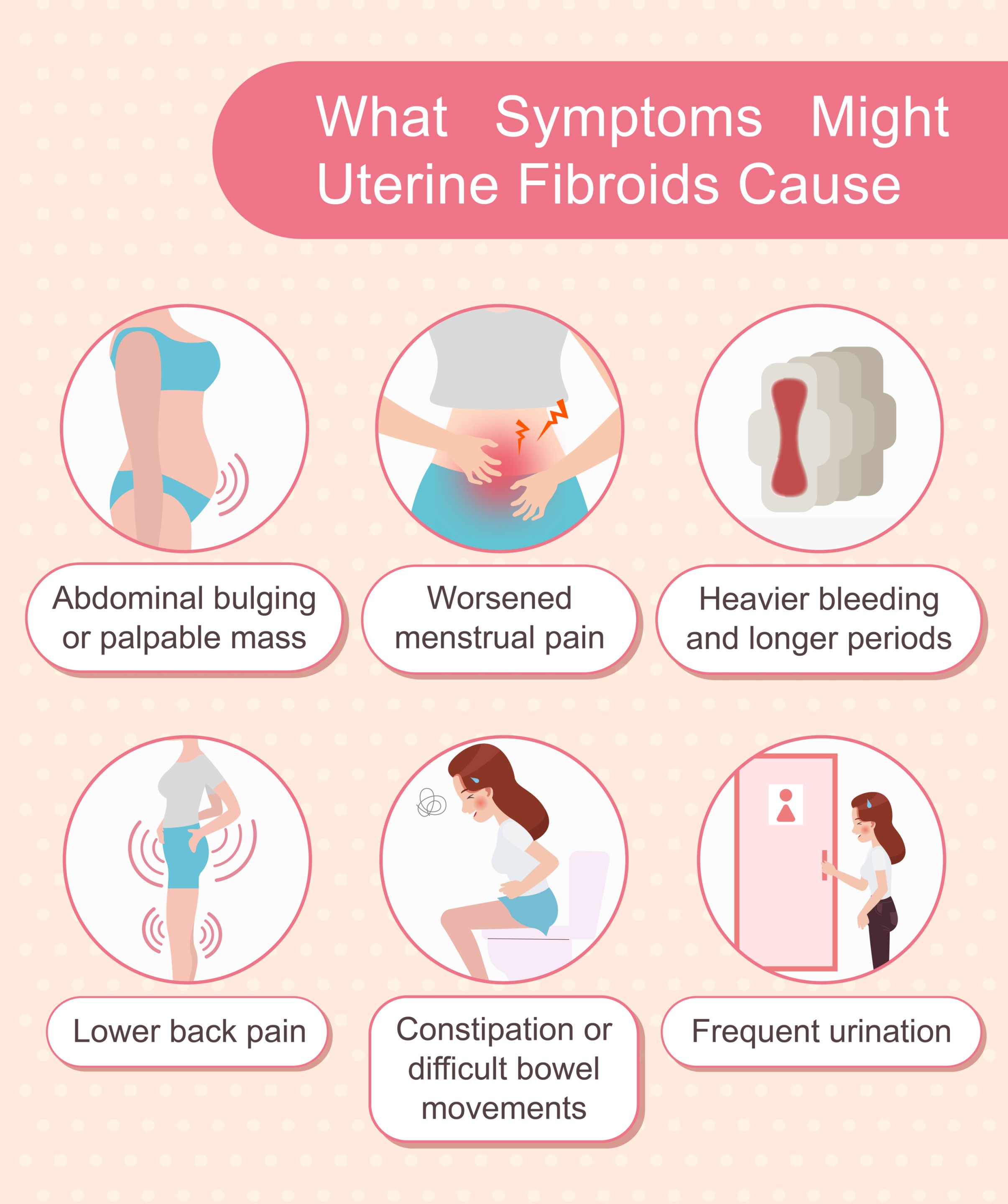
Most uterine fibroids are asymptomatic, but when symptoms appear, common warning signs include:
- Abdominal bulging or palpable mass: Large fibroids may cause lower abdominal protrusion or a hard lump.
- Worsened menstrual pain: Increased pain during periods or non-menstrual pelvic pain.
- Heavier bleeding and longer periods: May lead to more clots and severe anemia.
- Lower back pain: Large fibroids pressing on nerves can cause chronic soreness or pain in the lower back.
- Constipation or difficult bowel movements: If the fibroid presses on the rectum from behind, it can lead to constipation or difficulty passing stool.
- Frequent urination: If the fibroid presses on the bladder from the front, it can reduce the bladder's capacity to hold urine, leading to frequent urination or difficulty urinating.
How to Diagnose Uterine Fibroids? Is the Examinaton Painful?
General Gynecological Examination
The doctor can assess the uterus by performing a pelvic examination, touching and feeling to evaluate its size, shape, and whether there are any hard lumps.
Transvaginal Ultrasound Examination
The doctor inserts the probe into the vagina to clearly observe the internal structures of the uterus, as well as the size and location of the fibroids.
Transabdominal Ultrasound
Gel is applied to the lower abdomen, and a probe scans externally. It's painless but may have lower resolution than transvaginal.
Pelvic Ultrasound Examination
An ultrasound examination performed through the abdomen. The examiner applies gel to the lower abdomen and uses a probe to scan. This examination is completely painless, but sometimes the image clarity is not as good as with transvaginal ultrasound.
MRI Scan
When a more precise evaluation is needed to assess the number, size, and type of fibroids, or to distinguish uterine fibroids from other pelvic tumors, a doctor may recommend an MRI to provide a three-dimensional view of the uterus.
Do Uterine Fibroids Affect Fertility? Common Complications
Miscarriage or Preterm Birth
Fibroids can distort the uterine cavity, interfere with implantation, or cause poor blood flow and space issues, raising risks of miscarriage or preterm birth.
Severe Abdominal Pain in Pregnancy
Hormonal surges may cause rapid fibroid growth, which can lead to tissue degeneration and pain.
Abnormal Fetal Position
Large fibroids take up space, preventing the fetus from turning properly.
Anemia and Postpartum Hemorrhage
If heavy bleeding is not treated, it can lead to iron-deficiency anemia, with symptoms such as dizziness, fatigue, and palpitations.
Can Uterine Fibroids Turn into Cancer?
Uterine fibroids are benign, with a very low chance (generally less than 0.5%) of malignant transformation.
Will Uterine Fibroids Resolve on Their Own? What Happens If Untreated?
Fibroids rely on estrogen for growth; post-menopause, declining hormones often cause natural shrinkage or disappearance.
Conservative Treatment Options for Uterine Fibroids?
Medication for Uterine Fibroids
Medicines help control symptoms. For example, pain relievers for cramping or hormonal therapies (such as birth control pills or an IUD) to reduce bleeding. These options are ideal for mild cases, for people who want to avoid surgery, or for those looking to preserve fertility.
How Often to Monitor Uterine Fibroids?
For patients without symptoms or those managed conservatively, ultrasound examinations are generally recommended every 6–12 months to track changes in fibroid size and symptom development.
What Surgical Options Are Usually Available for Uterine Fibroids? Which Treatments Suit Which People?
Fibroid Removal (Myomectomy)
This is suitable for women with severe symptoms and large fibroids who still want to become pregnant. The surgery removes only the fibroids while preserving the uterus. It can be performed through traditional open surgery, laparoscopic surgery, or hysteroscopy (appropriate for submucosal fibroids).
Hysterectomy (Removal of the Uterus)
This procedure removes the entire uterus (and possibly the cervix). It is the only treatment that can fully cure uterine fibroids and prevent them from recurring. It is generally recommended for women who no longer need to have children, have severe symptoms, or have too many fibroids. If the ovaries are preserved (i.e., they are not removed) during surgery, the body will still produce female hormones normally. However, based on clinical observations, after losing the uterus's blood supply, ovarian function may decline earlier than expected—often about 2 to 4 years sooner.
Uterine Artery Embolization (UAE)
Uterine artery embolization is a minimally invasive interventional treatment. Doctors inject tiny particles through blood vessels into the arteries that supply blood to the fibroids. This blocks blood flow, causing the fibroids to shrink due to reduced blood supply (ischemia). This treatment may be suitable for women who are concerned about long-term side effects from traditional surgery, but it's important to note that UAE may affect future fertility.
Do Uterine Fibroids Always Require Surgery? Key Indicators for Surgery
Not all uterine fibroids need surgery. Whether surgery is necessary depends on the severity of symptoms, the size and location of the fibroids, the patient's age, and future fertility plans.
Key surgical indicators include:
- Excessive menstrual bleeding that has caused severe anemia which cannot be corrected with medication.
- Compression symptoms caused by fibroids, such as severe constipation or frequent urination.
- Fibroids that are too large (for example, greater than 8–10 cm) or fibroids that are growing rapidly.
If you are dealing with uterine fibroids or have concerns about your symptoms, it is recommended that you seek a professional evaluation from an obstetrics and gynecology specialist. You may contact St. Paul's Hospital's Obstetrics and Gynecology Specialty Outpatient Department to make an appointment for a personalized diagnosis and treatment recommendations.
How Can Uterine Fibroids Be Prevented?
Because the causes of uterine fibroids are related to genetics and hormones, there is currently no certain way to prevent them. However, maintaining a healthy lifestyle—such as keeping a healthy weight, eating a balanced diet (more fruits and vegetables), and exercising regularly—may help support hormone balance in the body, which may reduce the risk of developing fibroids.
Frequently Asked Questions About Uterine Fibroids
What Is the Process of Laparoscopic Myomectomy?
Laparoscopic fibroid removal is a minimally invasive procedure by inflating the abdominal cavity with carbon dioxide (CO2) and insertion of instruments through small ports into the abdomen.
- Anesthesia and creation of pneumoperitoneum:
After the patient is placed under general anesthesia, doctors introduce carbon dioxide into the abdominal cavity to create a “pneumoperitoneum,” expanding the space and providing a clearer surgical view. - Small incisions and instrument placement:
Doctors make several small incisions on the abdominal wall and insert the laparoscope and other specialized minimally invasive surgical instruments through these openings. - Fibroid removal and pathology testing:
Doctors carefully enucleate the uterine fibroids from the uterine wall. Specimen removed and all tissue removed will be sent for histopathology examination or disposed of as appropriate unless otherwise specified. - Closing the incisions:
Doctors safely remove all instruments and carefully suture the small abdominal openings.
Compared with traditional open surgery, laparoscopic myomectomy typically involves smaller incisions, less postoperative pain, a lower risk of wound infection, and usually allows patients to return to daily activities in a shorter time.
Can Women With Uterine Fibroids Still Get Pregnant?
Most women with uterine fibroids can still conceive naturally. However, if the fibroids are submucosal (affecting the uterine lining) or are so large that they distort the uterine cavity, they may reduce the chance of conception or increase the risk of miscarriage. If you are planning a pregnancy, you should consult a specialist in Obstetrics & Gynaecology beforehand.
How Many Centimeters of Fibroids Require Surgery?
Fibroid size is not the only criterion. The key issue is whether the fibroids cause complications. Uterine fibroids typically grow by an average of about 1 cm per year. If a patient’s fibroids increase by 3–5 cm within one year and continue to show ongoing growth, the doctor may evaluate whether more examinations are needed and whether surgery should be considered. In other words, the decision to proceed with surgery should be based on an overall assessment of symptoms, location, and growth rate.
After Uterine Fibroid Surgery, How Many Days Should I Rest?
- Traditional open surgery: may require rest for 4 to 6 weeks
- Laparoscopic minimally invasive surgery: recovery is shorter, about 1 to 2 weeks
- Hysteroscopic surgery: recovery is the fastest; normal activities may be resumed within a few days
Can Uterine Fibroids Come Back After Surgery?
As long as the uterus remains, fibroids may recur. Even after undergoing fibroid removal, there is still a chance of recurrence. The only definitive cure is hysterectomy.
Can Uterine Fibroids Indicate Cervical Cancer?
No. Uterine fibroids are benign (non-cancerous) smooth muscle tumors inside the uterus, while cervical cancer is a malignant condition in the cervix (“the neck” of the uterus). They are completely different diseases with different causes. Cervical cancer is mainly associated with infection by the HPV virus.
Reference:
1. Hong Kong Specialist Medical Assoication http://www.hksma.org.hk/portal/content.do?path=/zh/mediaC/publicInfoC/healthInfoC/ObstAndGyne&fMenu=1


