


The article has been reviewed by Dr. Lau Kai Yum, Jonathan, Specialist in Otorhinolaryngology


In Hong Kong, chronic rhinitis and sinusitis are extremely common urban health problems. Many people initially think it's just a regular cold or allergies—until they experience thick phlegm draining backward, severe facial pain, and even nasal polyps that lead to long-term nasal congestion. Then they realize the issue is more serious. This article will help you understand sinusitis in depth,from anatomy to the latest treatment options,so you can breathe comfortably again.
Understanding Sinusitis: Why Does Your Nose Become a “Pus Reservoir”?
The Physiological Structure and Function of Sinuses: They're Not Just “Empty Spaces”
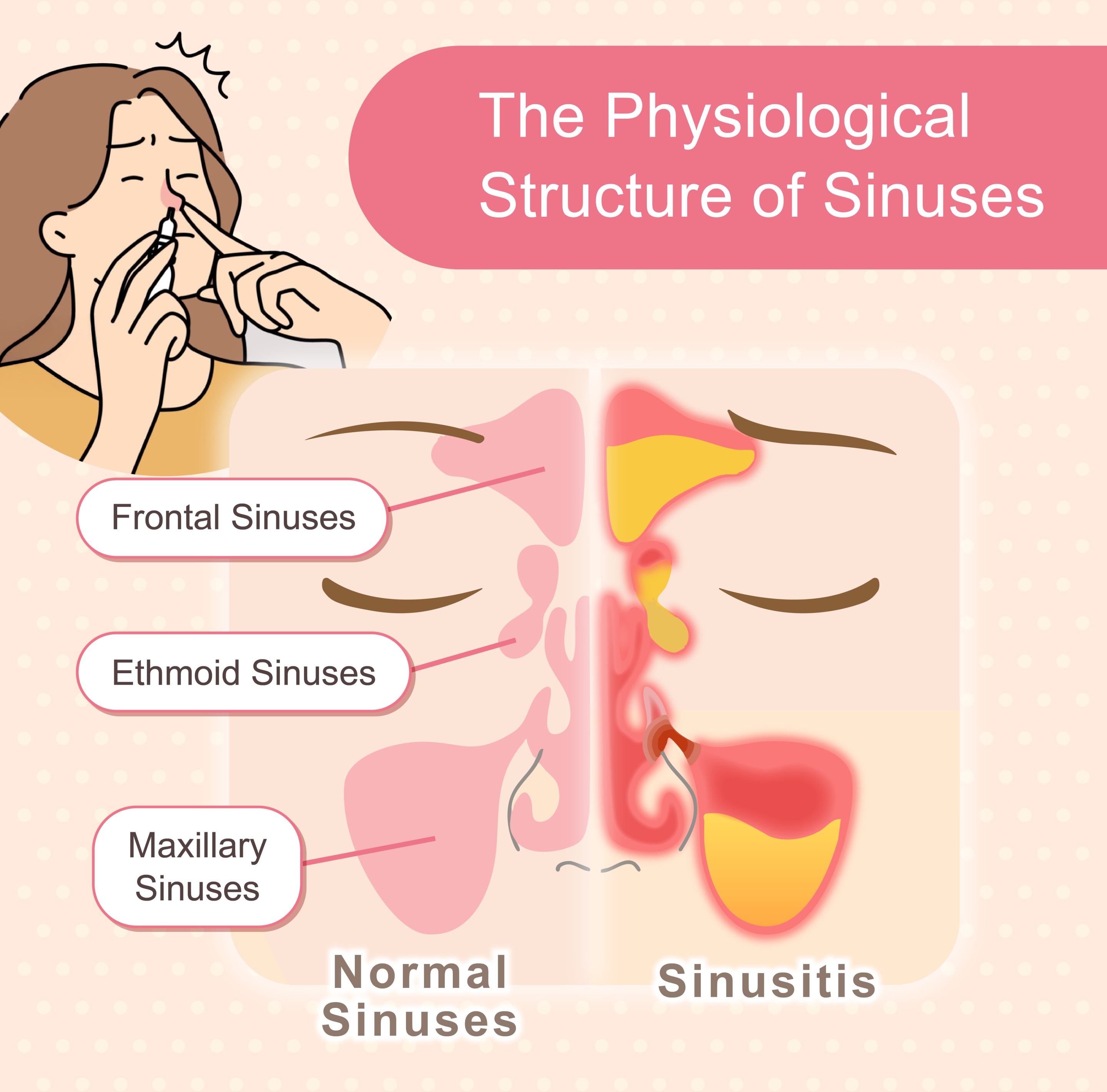
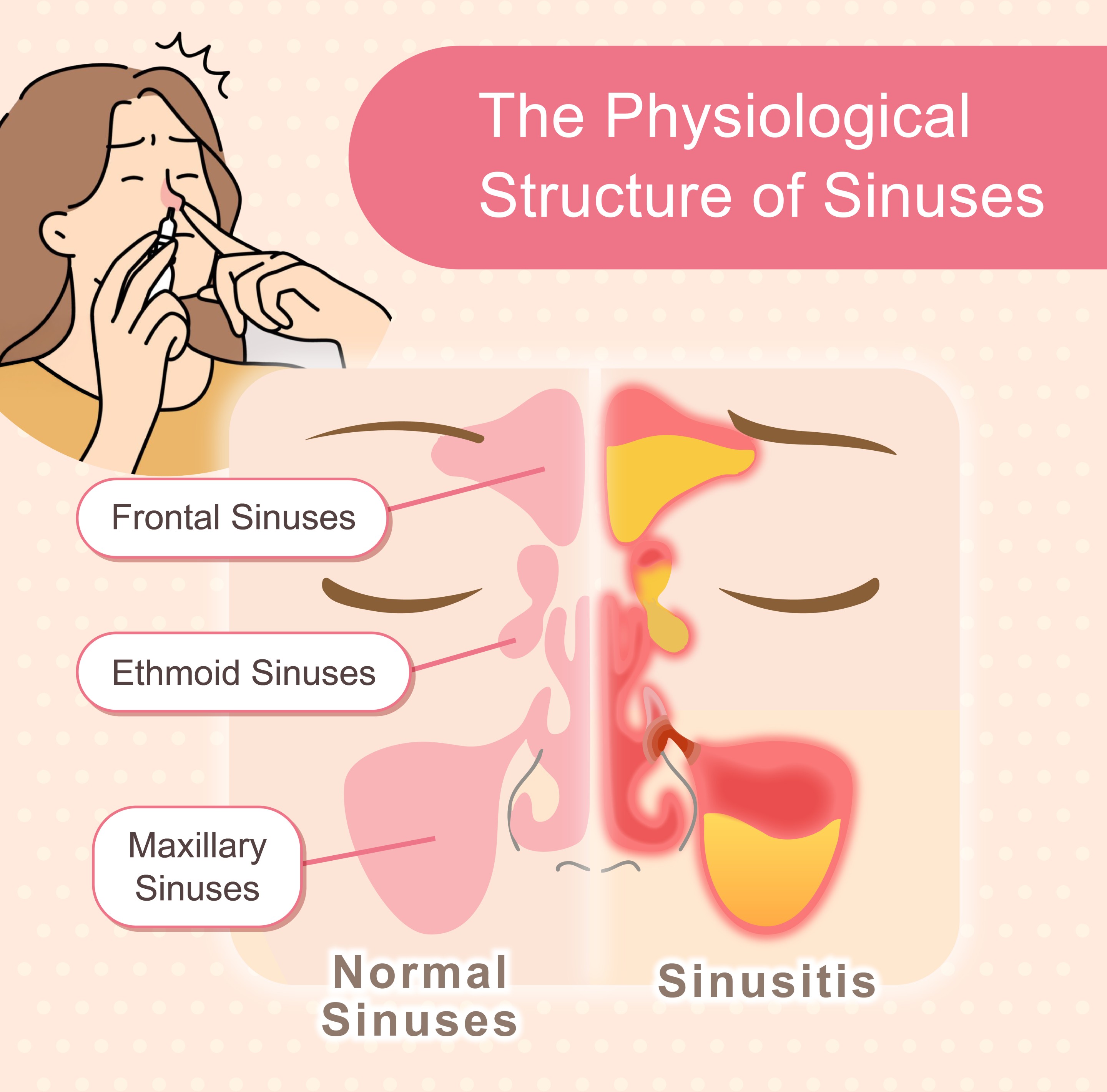
Many people think of the nose only as an airway for breathing. In reality, the sinuses are air-filled spaces inside the skull that connect to the nasal cavity. Their surfaces are lined with mucous membranes—this is what we call the “sinuses.”

(  Click the image to enlarge )
The Four Pairs of Sinuses and Their Roles: Frontal Sinuses, Ethmoid Sinuses, Maxillary Sinuses, and Sphenoid Sinuses
- Frontal Sinuses: located above the eyebrows.
- Ethmoid Sinuses: located between the two eyes.
- Maxillary Sinuses: located below the eye sockets, within the cheekbones; they are the largest sinuses and the most commonly inflamed area.
- Sphenoid Sinuses: located deep inside the nasal cavity, close to the center of the skull.
The Three Main Functions of the Sinuses: Regulate Air Humidity, Reduce Head Weight, and Produce Resonant Speech
- Regulate humidity of breathing air: warm and humidify the air you inhale.
- Reduce head weight: make the skull lighter and reduce strain on the neck.
- Resonant speech: affect the tone and loudness/clarity of your voice.

(  Click the image to enlarge )
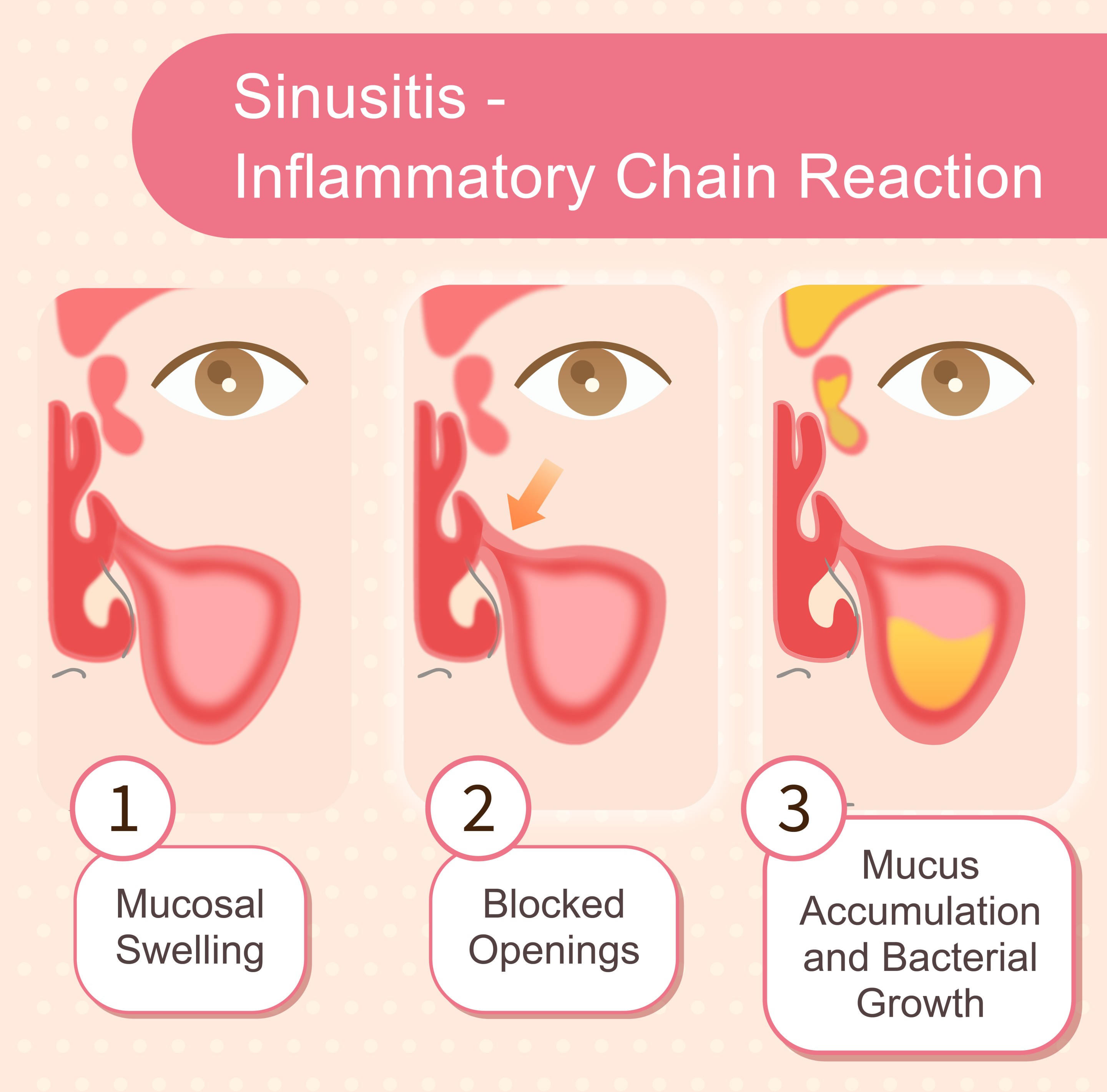
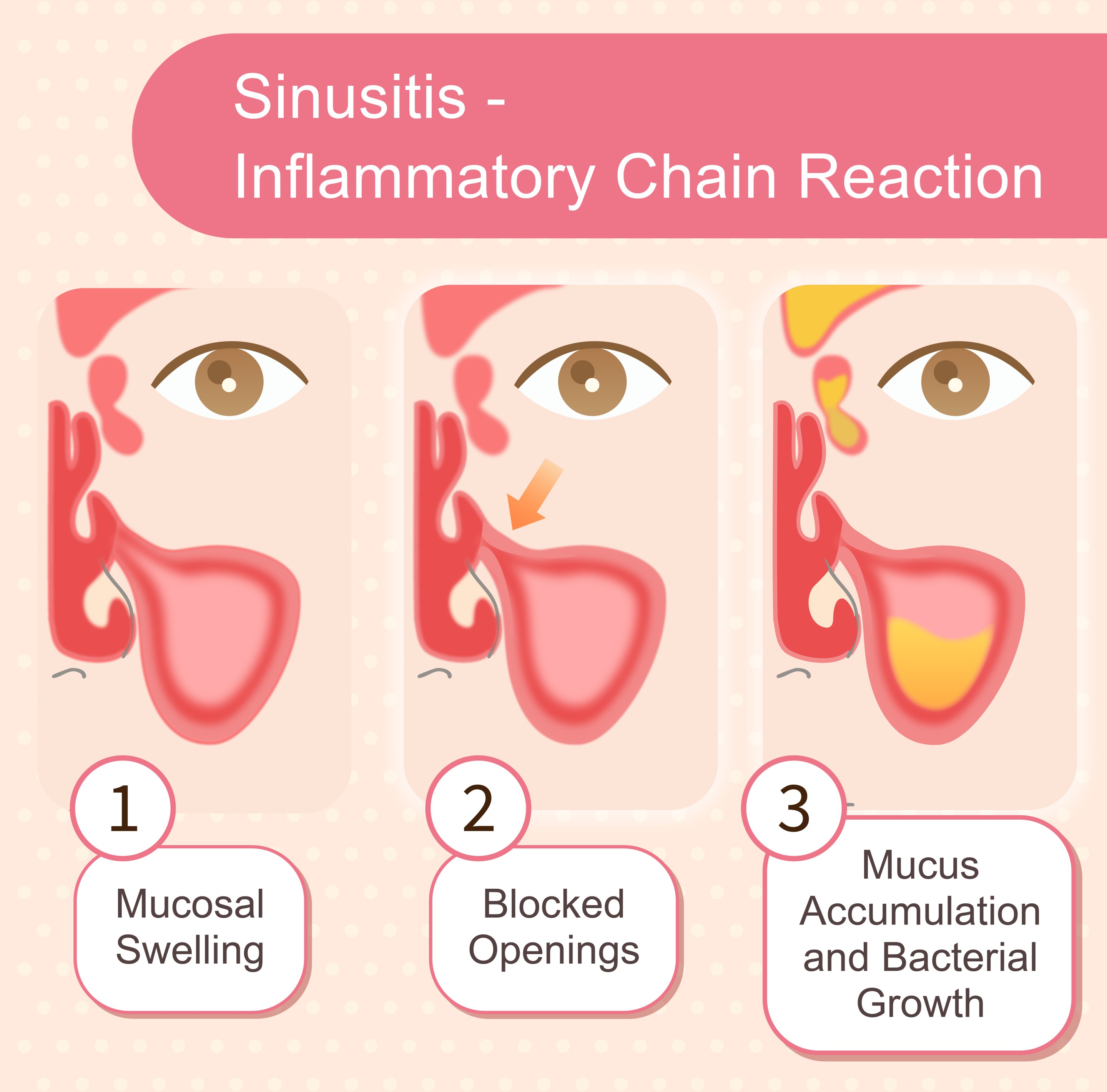
The Inflammatory Chain Reaction: Mucosal Swelling → Blocked Openings → Mucus Accumulation → Bacterial Growth
When the sinus lining swells due to infection or allergy, the sinus openings can become blocked, causing mucus to build up inside the sinuses. These secretions can't be properly drained and become a breeding ground for bacteria, which then leads to pus formation and infection.
Acute vs. Chronic Sinusitis
To choose the right sinusitis treatment, you first need to understand which stage your sinusitis is in:
Acute Sinusitis (ARS): Symptoms Usually Resolve Within 4 Weeks and Are Often Triggered by Colds
This is the most common type. It is usually caused by an upper respiratory viral infection (a cold). Symptoms often come on quickly, but with appropriate care and medication, most people recover completely within four weeks.
Subacute Sinusitis: Symptoms Last 4 to 12 Weeks
If the infection from the acute phase isn't fully cleared, symptoms may linger. This is a warning sign, suggesting that the cilia's mucous-clearing (mucociliary “self-cleaning”) function may already be impaired.
Chronic Sinusitis (CRS): Symptoms Last More Than 12 Weeks and May Involve Nasal Polyps
When inflammation persists for more than three months, it can evolve into chronic sinusitis. Long-term inflammation can irritate the mucosa and cause abnormal growth, forming benign nasal polyps. This not only worsens blockage but can also seriously impair your sense of smell.
Causes of Sinusitis Explained: It's Not Just “A Cold That Didn't Get Better”
Pathogen Infection: The most common direct cause
Viral Infection
In the early stages of acute sinusitis, it is often caused by viruses (such as rhinovirus or influenza virus). This usually resolves on its own, especially when the immune system is strong.
Bacterial Infection
If a viral infection damages the mucosa's defense mechanisms, or if nasal drainage becomes poor, bacteria such as Streptococcus pneumoniae and Haemophilus influenzae may take advantage of the situation and cause a purulent bacterial infection (thick yellow-green nasal discharge).
Fungal Infection
Less common, it usually occurs in people with weakened immunity or those who have used antibiotics for a long time. Fungi may form a “fungal ball” inside the sinuses, which typically requires surgical removal.
Physical Structure and Environmental Triggers
Allergic Rhinitis (Allergic Nasal Sensitivity): Long-Term Chronic Inflammation Leads to Mucosal Thickening
Uncontrolled long-term allergic rhinitis keeps the nasal lining in a chronically swollen state, greatly increasing the risk of sinusitis.
Abnormal Anatomy: Deviated Nasal Septum, Enlarged Turbinates
Congenital or acquired deviation of the nasal septum, or enlarged inferior turbinates due to long-term allergies, can block the drainage pathways of the sinuses.
Nasal Polyps: Benign Tissue Growth That Is a Major Cause of “Chronic Blockage”
Like clusters of grapes growing inside the nasal cavity, polyps can directly block the sinus openings. This is one of the most common culprits behind recurrent chronic sinusitis.
Hidden Cause: Dental-Origin Infection
Because the roots of the upper teeth are very close to the floor of the maxillary sinus, severe tooth decay, periodontal disease, or infection after tooth extraction can directly penetrate bone and introduce bacteria into the maxillary sinus, causing severe sinusitis on one side.
Sinusitis Symptoms Explained: How to Identify “Warning Signs” Accurately?
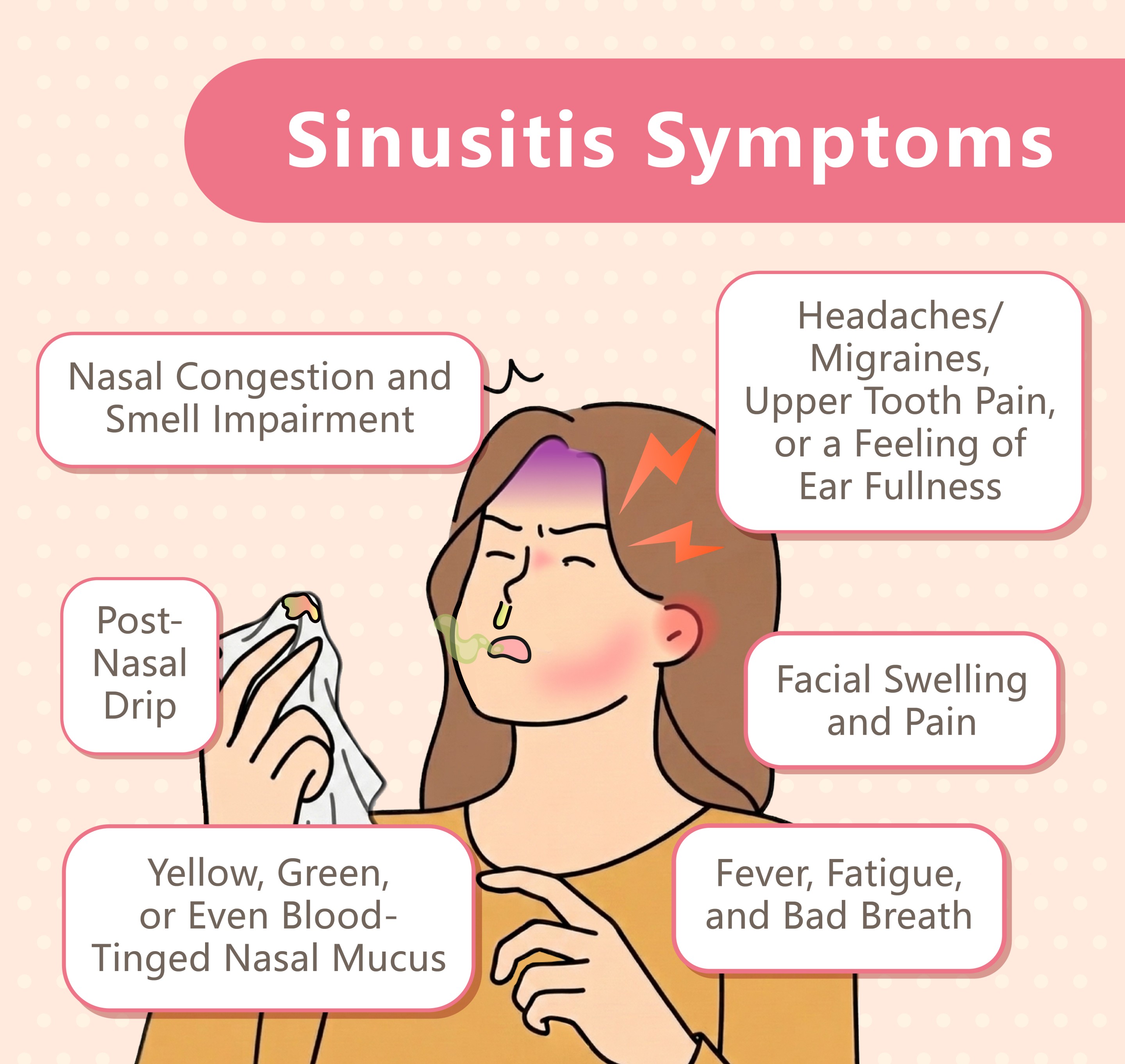
( Click the image to enlarge )
Four Core Symptoms (Major Diagnostic Indicators)
Thick Purulent Nasal Discharge: Yellow, Green, or Even Blood-Tinged Nasal Mucus
Thick Purulent Nasal Discharge: Yellow, Green, or Even Blood-Tinged Nasal Mucus
This is leftover material after bacterial infection occurs in the sinuses and white blood cells fight it. It is thick and sticky, and often difficult to expel.
Facial Swelling and Pain: Pressure Around the Eye Sockets, Cheeks, or Forehead
When you bend down, lean forward, or jump, the pain and pressure intensify quickly. This happens because accumulated pus presses on the inflamed sinus wall nerves due to gravity.
Nasal Congestion and Smell Impairment
Mucosal swelling and mucus blockage obstruct the area where smell nerves function, leading many patients to complain that food “has no taste” or “no smell.”
Post-Nasal Drip: Causes a Foreign-Body Sensation in the Throat
When pus cannot drain forward, it flows backward into the throat, irritating it and leading to chronic cough (especially noticeable when lying down at night).
Other Body Discomfort That May Occur Alongside
Referred (Radiating) Pain: Develops into Headaches/Migraines, Upper Tooth Pain, or a Feeling of Ear Fullness
Maxillary sinus inflammation commonly causes upper tooth pain. If it affects the ear and related passages, it can lead to fluid buildup in the middle ear or a blocked/“full” feeling in the ear.
Systemic Reactions: Fever, Fatigue, and Bad Breath (Putrid Odor from Purulent Discharge)
Infected mucus ferments in the nasal cavity, causing unpleasant bad breath. Bacterial toxins can also enter the bloodstream, leading to fatigue and mild fever.
Symptom Comparison: Sinusitis vs. Common Cold vs. Allergic Rhinitis
|
Feature |
Sinusitis |
Common Cold |
Allergic Rhinitis |
|
Nasal discharge |
Thick yellow-green pus-like mucus |
Clear at first, then becomes thicker |
Clear, watery |
|
Duration |
More than 10 days |
Self-resolves within 7–10 days |
Clear, watery |
|
Facial pain |
Noticeable swelling/pain |
Rare |
None |
|
Fever |
Common (especially in the acute stage) |
Occasionally |
No |
Key Differentiators: Duration, Mucus Texture, Fever, and Facial Pain
If you only have clear runny nose and itchy eyes, it is more likely allergic rhinitis. If you also have body aches, it is usually a common cold. However, if you have facial pain and yellow-green purulent (pus-like) discharge, it is very likely to be sinusitis , which should seek medical advice.
The 10-Day Critical Window: If Your Cold Lasts Over 10 Days, Beware of Sinusitis
If cold symptoms have not improved after 10 days, or if they suddenly worsen on days 5 to 7 (for example, you had a fever that went away but comes back again), this is an important warning sign and should seek for medical care promptly.
Will Sinusitis Go Away on Its Own? A Deeper Look at the Possibility of “Self-Healing”
When Can You Observe and Possibly “Self-Heal”?
Mild Viral Cases: Symptoms Are Mild and No Fever
In the first 7 days after symptoms start, if the nasal discharge is thick but not clearly yellow-green pus, and there is no fever or severe facial pain, your immune system usually has the capacity to clear the virus.
Ciliary Function Is Still Working and the Blockage Is Not Fully Sealed
As long as the sinus opening is not completely blocked, the mucosa's cilia can still help push secretions out. Strengthening drainage may allow the condition to resolve on its own.
Home Remedies for Faster Healing - Guidance for Proper “Nasal Irrigation”
Nasal irrigation is a physical supportive therapy that can help relieve sinusitis. It directly flushes out thick mucus, allergens, and inflammatory substances from the nasal cavity.
Cleanliness and Replacement of Irrigation Tools
After using a neti pot or nasal irrigation device, rinse with hot water and dry thoroughly. It is recommended to replace the nasal irrigation device every 3 months to prevent residual bacteria and reduce the risk of reinfection.
When Natural Recovery Is No Longer an Option: Critical Symptoms Requiring Medical Attention
Fever That Doesn't Go Away
A high fever (over 39°C) with chills suggests the infection has become very severe and may be bacterial and spreading.
Vision Impairment
Because the eye socket and sinuses are separated by only a thin barrier, if you notice eye swelling, double vision, blurred vision, or limited eye movement, it may indicate that bacteria have invaded the eye area—there is a risk to your vision.
Severe Headache or Stiff Neck: Watch for Meningitis Risk
If bacteria spread upward and infect the meninges (the lining around the brain), it can cause meningitis and even a brain abscess. This is life-threatening and requires urgent emergency care.
Professional Sinusitis Treatment: Medications, Diet, and When Surgery Is Needed
When home care can no longer control the condition, you should seek help from an ENT (Ear, Nose, and Throat) specialist. For more information about specialist examinations and treatments, you can refer to the professional services provided by St. Paul's Hospital ENT centre or book a consultation.
Non-Surgical Treatment Options: Stepwise Medication Approach
Antibiotics
For bacterial acute sinusitis. Typical treatment usually lasts 7 to 14 days. Patients must follow the doctor's instructions carefully and complete the full course. Do not stop antibiotics early just because symptoms improve as this can easily lead to antibiotic-resistant bacteria.
Intranasal Steroid Sprays
A “gold standard” treatment for chronic sinusitis and for shrinking nasal polyps. When used locally, steroid sprays can effectively reduce mucosal inflammation, and the absorbed dose into the bloodstream is very low. Long-term use is generally relatively safe under medical guidance.
Antihistamines and Decongestants
Antihistamines help control symptoms triggered by allergic rhinitis. Decongestant sprays (nasal decongestants) can quickly shrink blood vessels and relieve nasal congestion, but they should not be used continuously for more than 5 to 7 days to avoid rebound nasal congestion and medication-induced rhinitis.
Surgical Timing: When Should You Consider Functional Endoscopic Sinus Surgery (FESS)?
When medications cannot reverse the inflammatory condition, sinusitis surgery may become necessary. Functional endoscopic sinus surgery (FESS) is currently the most mainstream and mature minimally invasive option.
Surgical Assessment Indicator 1 — No Significant Improvement After More Than 3 Months of Medication
After adequate doses of antibiotics and steroid sprays, if symptoms still severely affect quality of life (e.g., long-term insomnia and headaches), surgery may be considered.
Surgical Assessment Indicator 2 — CT Imaging Shows Permanent Blockage at the Sinus Openings
A CT scan is a key tool for surgical assessment. If imaging shows the sinuses are filled with purulent material and the openings are completely sealed due to tissue deformation, the only effective solution may be to physically reopen the drainage pathways through surgery.
Surgical Assessment Indicator 3 — Severe Nasal Polyps or Impact on Heart/Lung Function
Large nasal polyps can completely block the nasal cavity. In patients who also have asthma, worsening sinusitis often directly triggers asthma attacks—at this point, surgery should be actively considered.
Advantages of Minimally Invasive Endoscopic Sinus Surgery:
Minimally invasive, preserves healthy tissue, and shortens recovery time.
The surgery is performed under endoscopic visualization and monitoring. ENT specialists insert the endoscope through the nostrils and precisely remove diseased tissue (such as polyps) and enlarge the sinus openings. There are no external wounds, so healthy mucosa is preserved to the maximum extent and recovery is faster. Endoscopic sinus surgery can improve nasal congestion, post-nasal drip, facial pain, and headaches, and help prevent sinusitis complications.
Prevention and Daily Maintenance: Don't Let Sinusitis Become an “Old Problem”
Small Lifestyle Adjustments
Regular Nasal Irrigation: Maintain Ciliary “Self-Cleaning” Efficiency
People who have had sinusitis before can incorporate saline nasal irrigation into daily hygiene. Regular rinsing helps remove sensitizers/allergens and keeps the nasal mucosa healthy.
Control Allergens: Reduce Chronic Irritation from Dust Mites and Pet Dander
Frequent washing of bedding, using dust-mite-proof covers for pillows and mattresses, and keeping the home well-ventilated can effectively reduce the frequency of allergic rhinitis episodes—cutting off the triggers of sinusitis at the source.
Strengthen Immunity: Get Enough Sleep and Exercise Regularly to Reduce Colds
Maintaining a regular routine and exercising to boost your immunity is the fundamental way to prevent illness.
Post-Operative Maintenance: Surgery Is Not the End
Post-Op Care Key Point :Why Nasal Irrigation After Surgery Is the Most Important for Preventing Recurrence?
Post-operative nasal irrigation is the most important step to prevent recurrence. Surgery opens up the drainage pathways, but mucosal repair still requires rinsing to clear residual clots and secretions, prevent tissue adhesions, and reduce the risk of relapse.
Common Questions (FAQ)
Can Sinusitis Be Contagious?
Sinusitis itself is not necessarily contagious. Viruses or bacteria that trigger sinusitis (e.g., influenza) can be contagious. If acute sinusitis is caused by viruses such as those that cause colds or influenza, those viruses can be contagious and spread along with cold/flu symptoms through droplets or close contact.
Can Nasal Irrigation Cure Chronic Sinusitis Completely?
Nasal irrigation is an excellent supportive treatment. It can relieve symptoms and reduce reliance on medication. But if there is a serious physical blockage (such as a deviated septum or large polyps), surgery may still be necessary.
If Sinusitis Is Not Treated, Can It Really Lead to Blindness or Encephalitis?
Although the probability is not high, because the sinuses are close to the eye sockets and the brain, if bacteria penetrate through weak bone barriers, it can indeed lead to orbital cellulitis and even meningitis. This should never be taken lightly.
Why Do You Still Get Intermittent Headaches Even After Sinusitis Improves?
Possible reasons include long-term inflammation causing nerve “sensitization,” or damage to the nasal mucosa that makes it more affected by changes in environmental air pressure. It’s recommended for regular follow-ups to monitor nasal health.


